
WELCOME BONUS 300%
UP TO €2000 + 100
FREE SPINS
UP TO €2000 + 100
FREE SPINS
Home → Blackjack
Blackjack at Spinz Casino: Variants, Rules and Payouts
Chose Wrong Table for 5 EUR Bankroll
For players with a small bankroll of 5 EUR, selecting the right blackjack table is crucial. For instance, a Blackjack Auszahlung 6:5 variant with a 98.15% RTP means a higher house edge of 1.85% compared to other tables. This higher house edge quickly erodes a smaller bankroll, making it difficult to sustain play. A 5 EUR bet at this table would only pay 6 EUR for a blackjack, a significant reduction from the standard 7.50 EUR.
Understanding the impact of rules on your bankroll is key. Consider Blackjack Ein Deck with classic rules and a 3:2 payout; this offers a 99.85% RTP and a 0.15% house edge. Playing this variant with 5 EUR could theoretically last much longer than the 6:5 payout game. The difference of 0.48% in house edge per deck means that even small bankrolls are better preserved on single-deck games.
For example, a 5 EUR bet on the single-deck game with a 3:2 payout would return 12.50 EUR for a blackjack. In contrast, the 6:5 version pays only 12 EUR. This seemingly small difference in payout becomes substantial over multiple hands, especially when starting with limited funds like 5 EUR, highlighting the importance of rule variations at the table.
What Peek Means with a Dealer Ace
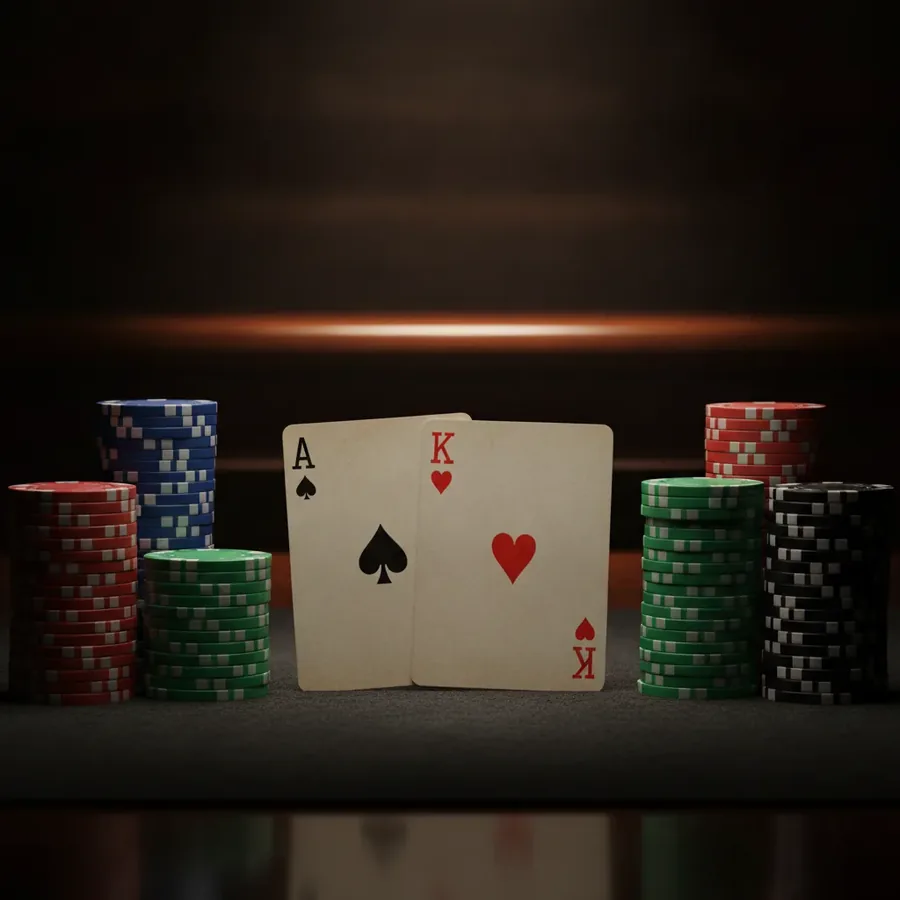
When a dealer shows an Ace, the term 'peek' refers to a specific action taken by the dealer. In games like Blackjack Party, the dealer will check their hole card for a blackjack before players make their decisions. This procedure is standard and aims to protect players from certain losses, especially when late surrender is not an option.
The consequence of a dealer peek is directly tied to insurance bets. If the dealer peeks and reveals a blackjack, any insurance placed is lost. Insurance itself is a side bet with a low RTP of 92.53% and a significant house advantage of 7.47%, making it generally unfavorable for players. This bet pays 2:1 but is rarely a wise decision outside of complex card counting scenarios.
For players, understanding the dealer's peek is vital for managing risk. If the dealer's peek confirms a blackjack, any hands are immediately lost, except for a player's own blackjack which would push. This rule prevents further betting on hands that are already mathematically defeated, saving players from potentially larger losses on subsequent plays.
Side Bets Increase House Edge to 5 Percent
Side bets in blackjack, such as Blackjack Insurance, significantly increase the house edge. While the main game might have a low house advantage, the insurance bet carries a substantial 7.47% house edge. This is considerably higher than the typical 0.46% found in more liberal blackjack variants like Blackjack Liberal Vegas Strip.
For example, if a player consistently makes insurance bets at a 6-8 deck game, they are effectively increasing their overall theoretical loss. The RTP for the insurance bet itself is 92.53%, which means the casino expects to retain 7.47% of all money wagered on this specific side bet over the long term. This is a stark contrast to the main game's RTP.
This elevated house edge means that for every 100 EUR bet on insurance, a player can expect to lose 7.47 EUR in the long run. Compared to a standard blackjack game with a 0.46% house edge, where 100 EUR bet would theoretically result in a loss of only 0.46 EUR, the impact of side bets is substantial and detrimental to player profitability.
Card Counting at Shuffle Master Table: why it fails
Card counting strategies are rendered ineffective at Shuffle Master tables due to the continuous shuffling of the deck. These automated shuffling machines, often used in games like Blackjack Party, redistribute cards after every hand or very frequently. This constant randomization prevents the accumulation of high-value cards on the player's side, a core principle of card counting.
The fundamental issue is the inability to establish a 'true count' with any reliability. Card counting relies on tracking the ratio of high to low cards remaining in the shoe. With continuous shuffling, the composition of the deck resets so rapidly that a player cannot gain an advantage. For example, even if several high cards are dealt, the machine immediately reintroduces them.
Therefore, players attempting to employ card counting techniques at a Shuffle Master table will find their efforts futile. The machine's primary function is to negate the advantage card counters seek. This setup ensures the house edge remains consistent, typically around 0.46% to 1.85%, regardless of player strategy based on card tracking.
One Deck vs Eight Decks in House Edge
The number of decks used in blackjack significantly impacts the house edge. A single-deck game, such as Blackjack Ein Deck with classic rules, offers a much lower house advantage of 0.15%. This is a substantial reduction compared to games using eight decks, which typically have a higher house edge due to the increased number of cards.
For instance, switching from an eight-deck game to a single-deck game can reduce the house edge by approximately 0.48%. This means that for every 100 EUR bet, a player is theoretically expected to lose significantly less on a single-deck game. The lower the number of decks, the more favorable the game becomes for the player in the long run.
This difference directly affects player bankrolls. A blackjack with a 3:2 payout at a single-deck game offers an RTP of 99.85%. In contrast, a game with a 6:5 payout and six decks, like Blackjack Auszahlung 6:5, has an RTP of only 98.15%. This 1.70% difference in RTP is crucial for players aiming to maximize their playing time and potential returns.
Blackjack variants at a glance
| Variant | Payout | House edge | Rule | Bet range |
|---|---|---|---|---|
| Blackjack Insurance / Versicherung (6–8 Decks) | 92.53% | 7.47% | Separate Nebenwette bis 50% der Hauptwette, wenn der Dealer ein Ass hat. Basisstrategie schreibt IMMER Ablehnung vor (außer Karten zählen bei True Count ≥ +3). Bei einem Deck Vorteil ≈ 5.88% | Insurance 2:1 |
| Blackjack 6 Decks, S17, DAS, DOA, Auszahlung 3:2, Basisstrategie | 99.54% | 0.46% | Dealer steht auf Soft 17; Verdopplung auf jeder Zweierkarte; Verdopplung nach Split erlaubt; keine Aufgabe. Basisstrategie ist für diesen Wert zwingend | Blackjack 3:2, normaler Gewinn 1:1, Insurance 2:1 |
| Blackjack Auszahlung 6:5 statt 3:2 (6 Decks) | 98.15% | 1.85% | Ersatz von 3:2 durch 6:5 fügt exakt +1.39 Prozentpunkte zum Vorteil des Casinos hinzu – stärker als jede andere Regeländerung. Bei $10 Einsatz zahlt Blackjack $12 statt $15. | Blackjack 6:5, Gewinn 1:1 |
| Blackjack Ein Deck, klassische Regeln, 3:2 | 99.85% | 0.15% | Weniger Decks = niedrigerer Vorteil; ein Deck gibt ca. −0.48 Prozentpunkte gegenüber 8 Decks. Oft durch 6:5 Auszahlung kompensiert. | Blackjack 3:2, Gewinn 1:1 |
| Blackjack Split / Double / H17 – Regel-Effekte | n.a. (Regel-Modifikatoren) | H17 +0.22 Prozentpunkte; RSA −0.08 Prozentpunkte; DAS −0.14 Prozentpunkte | Dealer Hits Soft 17 verschlechtert RTP um 0.22 Prozentpunkte; Resplit Aces verbessert um 0.08 Prozentpunkte; Double After Split verbessert um ca. 0.14 Prozentpunkte; 6 Decks statt 8 – ca. 0.02 Prozentpunkte. | Double – Einsatz ×2 mit einer Karte; Split – bis 4 Hände; Ass-Split meist mit einer Karte. |
| Blackjack Liberal Vegas Strip (liberale Regeln, 3:2) | 99.72% | 0.28% | Günstigste Regelkombination: S17 + DAS + Resplit + Late Surrender. Standardabweichung 1,15 | Blackjack 3:2, Gewinn 1:1 |
Place Side Bet before cards are dealt
Side bets in Blackjack, such as Insurance, are options available before the cards are distributed. Insurance, for example, can be up to 50% of the main wager when the dealer shows an Ace. This side bet has a house edge of 7.47% in a 6-8 deck game, significantly higher than the main game. For players not counting cards, the basis strategy dictates always declining this bet.
The RTP for the Insurance side bet in a 6-8 deck game stands at 92.53%, indicating a substantial disadvantage for the player. While the payout is 2:1, the odds are stacked against it in the long run. Avoiding this bet is a core tenet of basic strategy, except under specific card-counting conditions.
A practical example illustrates the disadvantage: a €10 bet on insurance could cost €5, with a 2:1 payout if the dealer has blackjack, netting €10. However, the 7.47% house edge means that over many hands, this bet erodes potential winnings more than the main game.
What doesn't count as Blackjack after Split?
When a player splits Aces in certain Blackjack variants, the subsequent hand might not be considered a true Blackjack. For instance, in Blackjack Split / Double / H17, if a player is dealt a ten-value card on a split Ace, it is typically treated as 21, not a Blackjack. This distinction can affect payouts and strategic decisions.
This rule variation impacts the player's advantage, as a natural Blackjack (Ace and a ten-value card on the initial deal) usually pays 3:2. A hand of 21 formed after a split might only pay 1:1, diminishing the return on a strong hand. For example, a €10 bet on a 3:2 Blackjack yields €15, whereas a 1:1 payout yields only €10.
The Blackjack Liberal Vegas Strip variant offers a more favorable environment for splitting. However, understanding the specific rules regarding split Aces and subsequent card draws is crucial for all Blackjack games. A 21 formed after a split, even with an Ace and a ten, is often not a Blackjack, altering the game's dynamics.
Blackjack Payout 3:2 Explained in Detail
The Blackjack Payout of 3:2 is a fundamental aspect of the game that significantly benefits the player. This means for every €2 wagered, a winning Blackjack hand pays out €3. For example, a €10 bet resulting in a Blackjack would yield €15 in winnings, in addition to the original €10 stake being returned.
Compared to a 6:5 payout, the 3:2 ratio offers a substantially better return. A €10 bet with a 6:5 payout would only return €12, effectively increasing the house edge by 1.39 percentage points. The Blackjack Liberal Vegas Strip variant, with its 3:2 payout, has a house advantage of only 0.28%.
This favorable payout is a key reason why many players seek out Blackjack tables offering 3:2. For instance, in Blackjack 6 Decks, S17, DAS, DOA, the 3:2 payout contributes to an RTP of 99.54%. Conversely, tables offering 6:5 instead of 3:2 dramatically reduce potential player winnings over time.
When can you increase your bet?
The opportunity to increase your bet in Blackjack typically arises with the 'Double Down' option, where players can double their initial wager in exchange for receiving just one more card. This strategic move is generally allowed on any first two cards in variants like Blackjack 6 Decks, S17, DAS, DOA. The bet can be increased up to the amount of the original bet.
Another instance where betting strategy can be altered is after a 'Split'. In games that permit 'Double After Split' (DAS), players can double their bet on one of the split hands, provided they receive only one additional card. This rule, present in Blackjack 6 Decks, S17, DAS, DOA, offers a strategic advantage.
The limits on increasing bets are game-specific and tied to specific actions. For example, in Blackjack Split / Double / H17, the 'Double' action allows for doubling the bet, but the specific conditions for when this is permissible must be understood. Players should consult the game rules displayed at the table for precise details on bet increases.
Soft Hand and Hard Hand Practically Distinguished
In Blackjack, a 'soft hand' contains an Ace that can be counted as either 1 or 11 without busting. For example, an Ace and a 6 is a soft 17 (A+6). A 'hard hand' either has no Aces, or it has an Ace that must be counted as 1 to avoid busting. A 10 and a 7 is a hard 17.
The distinction is crucial for strategy, especially concerning dealer rules. For instance, in Blackjack 6 Decks, S17, DAS, DOA, the dealer stands on Soft 17. This means if the dealer has a soft 17 (e.g., Ace and 6), they must stand, which is favorable for the player compared to games where the dealer hits soft 17.
Understanding soft and hard hands influences player decisions. If a player has a soft 18 (Ace and 7), they might hit, as the Ace can revert to 1 if the new card causes the total to exceed 11. However, if the hand becomes a hard 18 (e.g., 10 and 8), hitting carries more risk of busting.
Continuous Shuffling Machine shuffles after each round
A Continuous Shuffling Machine (CSM) is employed in some blackjack variants at Spinz Casino, a system that shuffles the deck after every single hand. This technology aims to maintain a random distribution of cards throughout the game. For instance, the 'Blackjack Ein Deck' variant, if utilizing a CSM, would continuously re-shuffle even a single deck.
The implication of a CSM is a consistently higher house edge compared to traditional shoe-based games where shuffling occurs less frequently. While 'Blackjack Ein Deck' boasts a theoretical RTP of 99.85% with a house edge of 0.15%, the constant re-shuffling can negate strategic advantages a player might otherwise gain. This contrasts with games where multiple decks are used and shuffled periodically, often presenting a slightly higher house edge but without the immediate re-shuffling effect.
For a beginner, understanding the CSM is crucial as it limits the effectiveness of card counting strategies and ensures each hand is an independent event. This means a player's past outcomes have no bearing on future hands. Consequently, playing a game with a CSM, even one with favourable rules like 3:2 payouts, necessitates relying solely on basic strategy to minimise losses over time.
How long do 100 EUR last at a 1 EUR table?
At a blackjack table with a 1 EUR bet per hand, 100 EUR could theoretically sustain 100 individual bets. However, the house edge, even at a favourable 0.15% for 'Blackjack Ein Deck', means that over time, a portion of these bets is expected to be retained by the casino. This is calculated as the average retained share of the stake, meaning not every 1 EUR bet will be returned.
Considering an RTP of 99.85%, a player can expect to get back approximately 99.85 EUR for every 100 EUR wagered over an extended period, implying an average loss of 0.15 EUR per 100 EUR. Therefore, 100 EUR at a 1 EUR table, with no winning streaks, might not last for the full 100 hands due to this inherent statistical disadvantage. For example, a series of losing hands would deplete the bankroll faster than the number of bets placed.
The duration of 100 EUR at a 1 EUR table is highly variable due to luck, but the house edge of 0.15% is a constant factor. A player aiming to play for an extended duration at this stake level would need to account for this statistical retention. For a beginner, it's advisable to view this bankroll as a playing fund rather than a guaranteed number of hands, as variance plays a significant role in short-term outcomes.
Seat change at the Live Table in 20 seconds
Live blackjack tables, such as 'Blackjack Party' by Evolution, offer a dynamic environment where seat availability can change rapidly. The rapid pace of the game, with a 1 EUR minimum bet, means players can enter and exit games with relative ease.
The concept of a 'seat change in 20 seconds' implies a swift process for players to join an active game if a seat becomes available, or to move to a different table if desired. This is particularly relevant for busy tables where multiple players are active. For instance, if a player decides to leave 'Blackjack Party', another player could potentially occupy that seat within a short timeframe, ensuring minimal downtime.
For a beginner, this quick seat change functionality means that joining a live blackjack game is generally straightforward. If a desired seat or table is occupied, a short wait might be all that is required to participate. This efficiency ensures that players can immerse themselves in the live dealer experience without significant delays, especially at tables with a broad range of betting options, like the 1 EUR to 1,000 EUR range found on 'Blackjack Party'.
Blackjack Contributes Only 10 Percent to Wagering
When engaging with bonus offers at Spinz Casino, it is crucial to understand how different game types contribute to wagering requirements. Blackjack games, including variants like 'Blackjack 6 Decks, S17, DAS, DOA', contribute only 10 percent towards the fulfilment of these bonus conditions. This means that for every 1 EUR wagered on blackjack, only 0.10 EUR counts towards clearing the bonus.
This 10% contribution rate significantly impacts how quickly a bonus can be converted into withdrawable cash. For example, a welcome bonus of 300% up to €2,000 requires substantial wagering. If a player were to wager €100 on blackjack, it would only count as €10 towards the total wagering requirement. This is in stark contrast to slots, which contribute 100% to wagering.
Consequently, a beginner aiming to utilise a bonus offer should be aware that relying heavily on blackjack to meet wagering obligations will extend the process considerably. If a bonus has a wagering requirement of 40 times the bonus amount, and a player receives €100 in bonus funds, they would need to wager €4,000 in total. Playing blackjack would mean needing to place €40,000 in bets to meet this requirement (€4,000 / 10%).
Bonus conditions often exclude Blackjack completely
Beyond the reduced contribution rate, bonus conditions at many online casinos, including potentially at Spinz Casino, may outright exclude blackjack from contributing to wagering requirements altogether. This is a common practice due to the game's relatively low house edge, especially in variants with favourable rules like 'Blackjack Liberal Vegas Strip' which has a house edge of 0.28%. Such exclusions are detailed in the specific bonus terms and conditions.
The exclusion of blackjack means that any money wagered on the game will not count towards fulfilling the turnover demands associated with a bonus. This can be a significant hurdle for players who prefer blackjack. For instance, if a bonus explicitly states 'Blackjack is excluded from wagering', then playing 'Quantum Blackjack Plus Live' with its RTP of 99.57% will not help in clearing the bonus, regardless of the bet amount.
For a new player, it is imperative to meticulously review the bonus terms and conditions before accepting any offer. Understanding whether blackjack is excluded or only contributes a small percentage is vital for managing expectations and strategising bonus play. Failure to do so could lead to disappointment, as funds wagered on blackjack may not contribute to the bonus release, making it effectively unplayable for bonus clearance purposes.
Contact
Live - online chat
Banking








Providers












Spinz Casino 2026